Island-Guide.com
Nantucket Island


Abram's Eyes: The Native American Legacy of Nantucket Island
by Nathaniel Philbrick
  Abram's Eyes tells the little-known story of Nantucket's Native American past. Heavily illustrated, including a detailed map of the island's Indian place-names, this book brings a fresh and exciting perspective to Nantucket's history.
  More information and prices from:
Amazon.com - US dollars
Amazon.ca - Canadian dollars
Amazon.co.uk - British pounds
Amazon.de - Euros
Amazon.fr - Euros


Cape Cod, Martha's Vineyard, and Nantucket: An Explorer's Guide, Fifth Edition (Explorer's Guides)
by Kim Grant
  Cape Cod, Martha's Vineyard, and Nantucket can present a bewildering array of vacation options to visitors and locals alike. In this completely revised and updated fifth edition of the most comprehensive guide to the region, Kim Grant helps travelers cut through the clutter to find lodging, dining, and attractions to suit every taste and budget. She guides readers to nature preserves and bird sanctuaries; bicycle trails and beach paths; historic homes and lighthouses; whale-watching, sailing, and shell-fishing; antiques shops and local artisans; and summer theater, live music, and nightlife. Grant recommends lodgings ranging from family-friendly cottage rentals, to B&Bs, to luxury resorts, and dining options from clam shacks to four-star cuisine. More information and prices from:
Amazon.com - US dollars
Amazon.ca - Canadian dollars
Amazon.co.uk - British pounds
Amazon.de - Euros
Amazon.fr - Euros

Nantucket Island

Buy Dionis Beach, Nantucket at Art.com
Dionis Beach, Nantucket
Details From Art.com

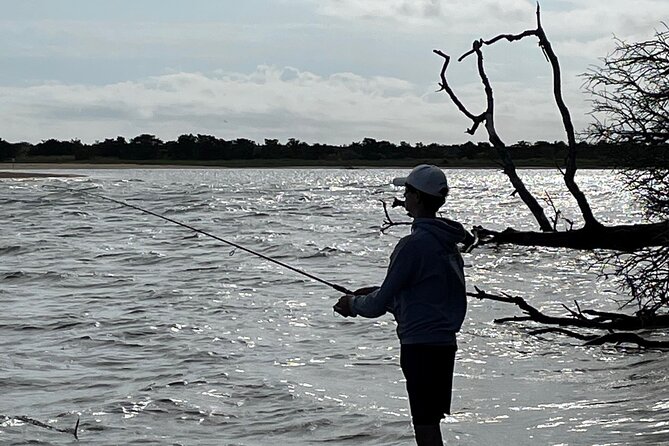
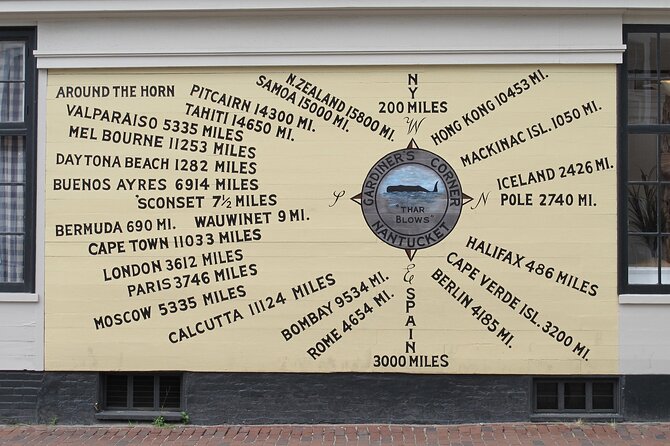
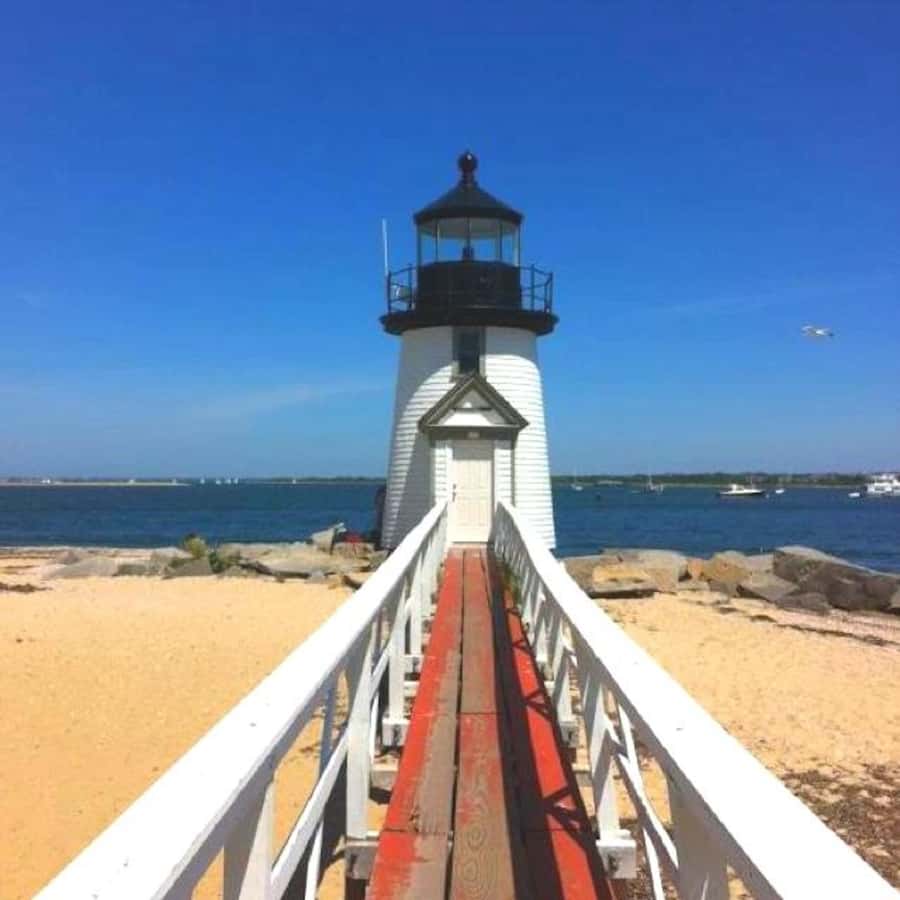
Nathaniel Philbrick's wonderful Abram's Eyes: The Native American Legacy of Nantucket Island is one of the few books to do justice to the native American inhabitants who had lived in Nantucket and Martha's Vineyard for some 5,000 years. Most local histories and tourist literature is focused on the European settlers and the whaling period. Nantucket, 28 miles off the coast of Cape Cod, is something of an archaeologist's paradise. Arrowheads are often washed from the sand banks and dumps of shells (midden waste) are found in construction sites.

Nathaniel Philbrick states that:

'... Nantucket's present-day reputation does not justly reflect its past. Instead of the birthplace of the Quaker whaleman (who flourished for a mere century or so), Nantucket should be remembered as, in the words of Massachusetts Governor John Winthrop, "an island full of indians." For the vast majority of its history, Nantucket had been home to a people who viewed it not as a sandy launching pad to wealth or relaxation, but as an island of remarkable variety and abundance.'

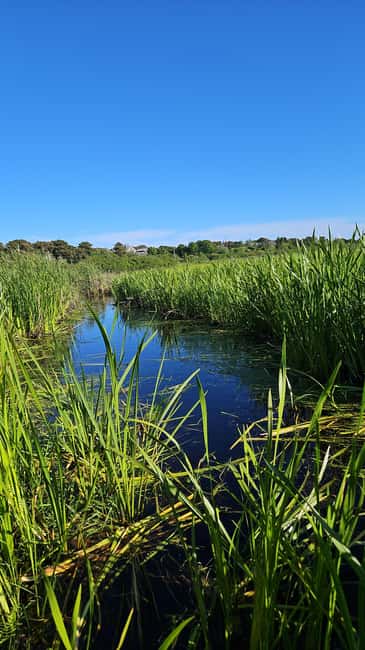
The indigenous people lived a comparatively healthy life, moving their wigwams to the beaches in summer and the forests in winter. They were not extensive horticulturists like their mainland relatives but they gathered the plentiful wild fruit and maintained small kitchen gardens. They made considerable use of shellfish, ducks and beached pilot whales. Cemetery evidence shows them to have been relatively tall - the men averaging five foot nine and a half inches, the women five foot three.

Unlike Martha's Vineyard, Nantucket no longer has a recognized Wampanoag community.

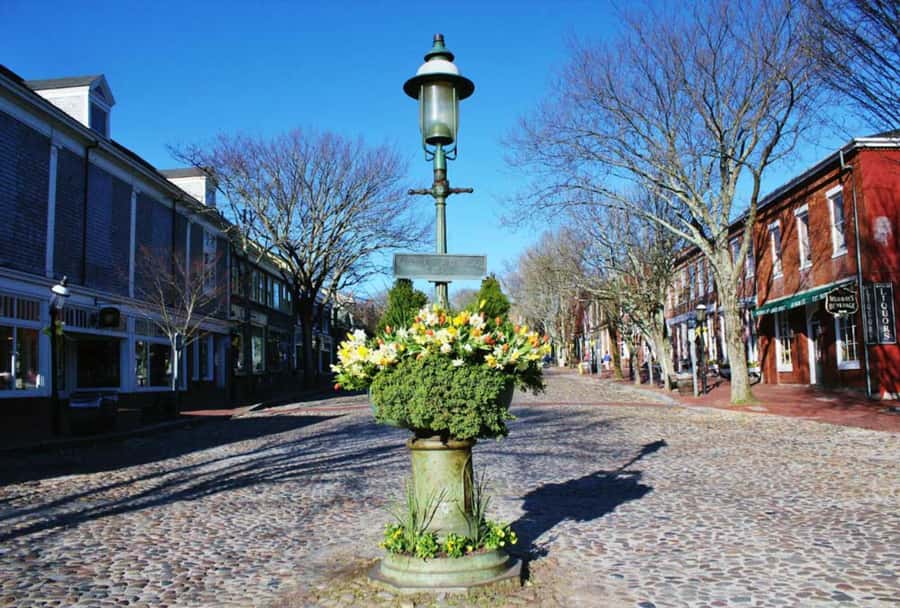
In his A World of Islands Leslie Thomas describes waking up to the fifty-two strikes pf the town clock in Orange Street at seven in the morning and then walking about the place on a sunny July morning. He found a town that its inhabitants two centuries earlier would have had no difficulty in recognizing:

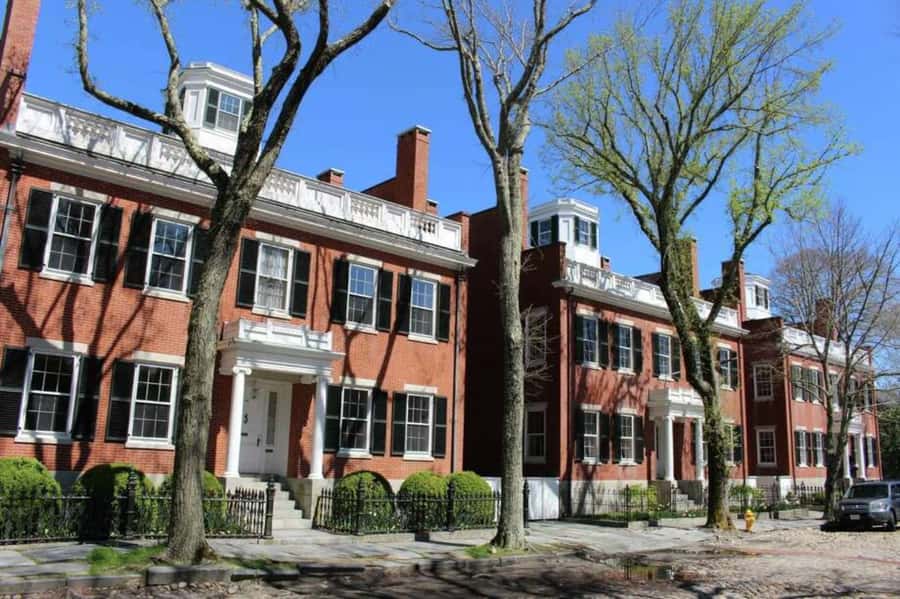
'Trees spread like clouds over the streets, their ancient roots pushing the brick pavements into hills and furrows. The main streets are cobbled, laid down in Nantucket's whaling days to prevent the horse-drawn drays, used to drag the casks of blubber from the quayside, from sinking into the mud of the unpaved streets. Some say the cobbles were brought from Gloucester, Massachusetts, others from Gloucester, England, taken across the Atlantic as ballast in ships come to fetch the whale oil.'

The whaling references are significant because this, as Thomas notes, was once the greatest whaling port in the world. Its elegant late-18th century and early 19th century houses testify to the island's wealth.


Antiquarian and out-of-print books about New England (Abebooks.com)

More New England articles:

New England Cooking

Radisson Hotel Plymouth introduces new golf partnership

Maine Islands - an Island a Day

Martha's Vineyard

Elizabeth Islands

Block Island

Books about Cape Cod, Martha's Vineyard, Nantucket and the Elizabeth Islands


The Enduring Shore: A History of Cape Cod, Martha's Vineyard, and Nantucket
by Paul Schneider
  Cape Cod's Great Beach, Martha's Vineyard, and Nantucket are romantic stops on Schneider's roughly chronological human and natural history. His book is a lucid and compelling collage of seaside ecology, Indians and colonists, religion and revolution, shipwrecks and hurricanes, whalers and vengeful sperm whales, glorious clipper ships and today's beautiful but threatened beaches. Schneider's superb eye for story and detail illuminates both history and landscape. A wonderful introduction, it will also appeal to the millions of people who already have warm associations with these magical places
  More information and prices from:
Amazon.com - US dollars
Amazon.ca - Canadian dollars
Amazon.co.uk - British pounds
Amazon.de - Euros
Amazon.fr - Euros


Contact
Links
Privacy Policy
BestBooks.biz
HRM Guide Australia
HRM Guide Canada
HRM Guide UK
HRM Guide USA
JobSkills.info
Copyright © Alan Price and HRM Guide Network contributors. All rights reserved.